Energy-Efficient Retrofitting Strategies for Research Laboratory Buildings
Case Study at the University of Utah

Downloads
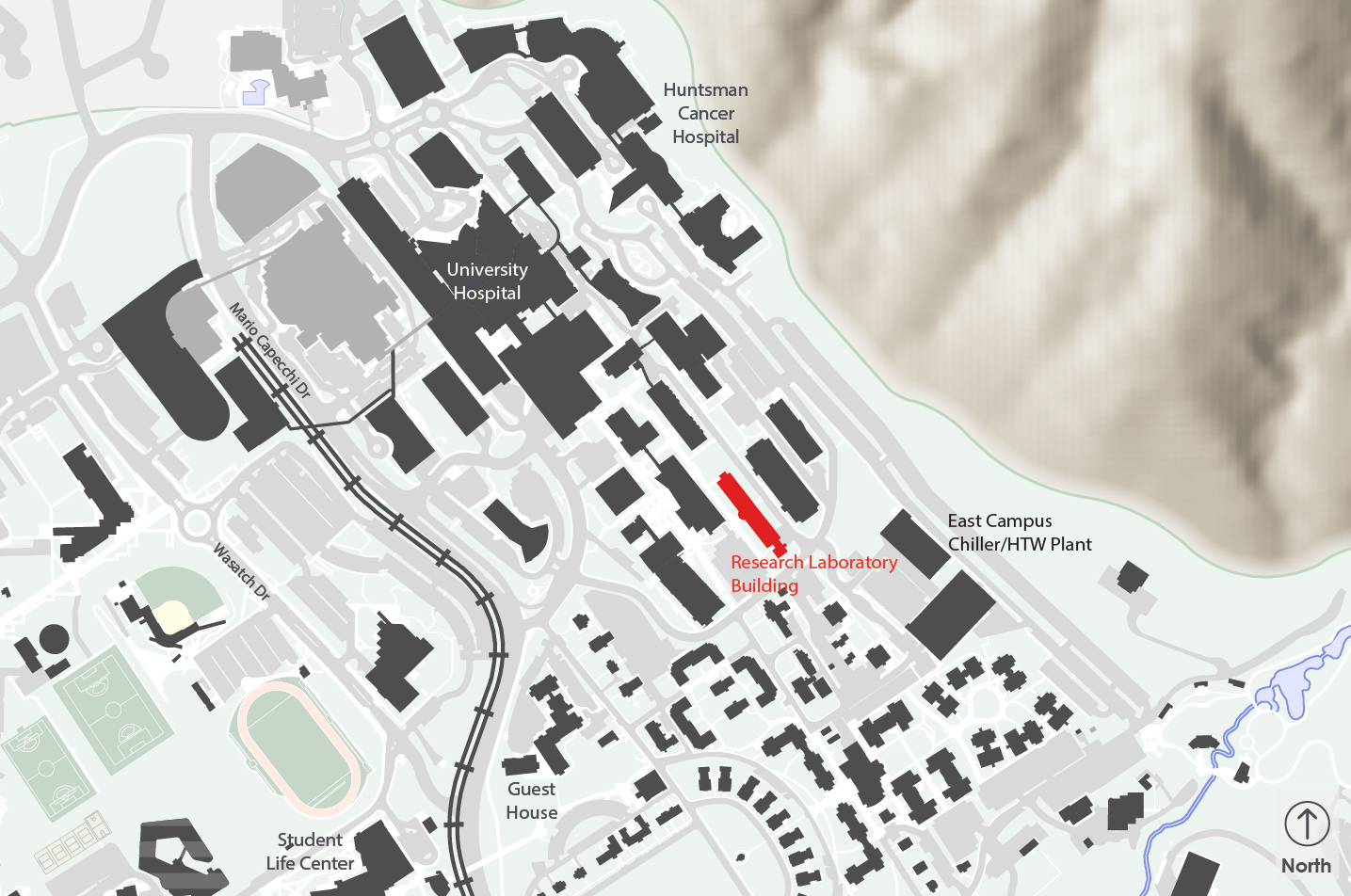
This research study examined building performance and retrofitting strategies for reducing energy consumption in existing research laboratories. Research laboratory buildings are one of the most energy-intensive building typologies due to their high energy demands, complex building systems, and significant loads for mechanical cooling and ventilation. Retrofitting may extend building lifespan and improve their performance, energy consumption, carbon footprint, and occupants’ comfort. The study examined an existing research laboratory building at the University of Utah campus, utilizing a combination of research methods, such as archival and observational studies, field measurements, building envelope and HVAC systems assessment, and whole-building energy modeling and simulations. Actual energy consumption data was collected for three years and compared against simulated data. Five different retrofitting options were considered, where four options represented low-impact retrofits (improvements to the building envelope and interior lighting) and one option represented a deep-impact retrofit (improvements to the building envelope, interior lighting, and HVAC systems). These investigated retrofit options were simulated and compared to the building’s actual and simulated energy consumption data. The results show that the deep-impact retrofit option would have the highest impact on energy use savings (more than 50% energy savings), while the four low-impact retrofit options would have lower, but comparable results (between 22% and 27% energy savings). Therefore, improvements to the mechanical systems are necessary to significantly reduce energy consumption and the associated carbon footprint of existing research laboratory buildings, besides building envelope and lighting improvements.
Aksamija, A., (2016). “Regenerative Design and Adaptive Reuse of Existing Commercial Buildings for Net-Zero Energy Use”, Journal of Sustainable Cities and Society, Vol. 27, pp. 185-195, https://doi.org/10.1016/j.scs.2016.06.026.
Aksamija, A. 2017. “Impact of Retrofitting Energy-Efficient Design Strategies on Energy Use of Existing Commercial Buildings: Comparative Study of Low-Impact and Deep Retrofit Strategies”, Journal of Green Building, Vol. 12, No. 4, pp. 70–88, https://doi.org/10.3992/1943-4618.12.4.70.
Amaripadath, D. and Sailor, D., (2024). “Reassessing Energy-Efficient Passive Retrofits in Terms of Indoor Environmental Quality in Residential Buildings in the United States”, Energy and Buildings, Vol. 319, 114564, https://doi.org/10.1016/j.enbuild.2024.114564.
American Society of Heating, Refrigerating and Air-Conditioning Engineers, (2022). “Standard 90.1-2022: Energy Standard for Sites and Buildings Except Low-Rise Residential Buildings”, Peachtree Corners, GA.
Beninca, L., Sanchez, E., Passuello, A., Leitzke, R., Grala da Cunha, E. and Gonzalez Barroso, J., (2023). “Multi-Objective Optimization of the Solar Orientation of Two Residential Multifamily Buildings in South Brazil”, Energy and Buildings, Vol, 285, 112838, https://doi.org/10.1016/j.enbuild.2023.112838.
Citadini de Oliveira, C., Martins Vaz, I., and Ghisi, E., (2024). “Retrofit Strategies to Improve Energy Efficiency in Buildings: An Integrative Review”, Energy and Buildings, Vol. 321, 114624, https://doi.org/10.1016/j.enbuild.2024.114624.
Dolsak, J., (2023). “Determinants of Energy Efficient Retrofits in Residential Sector: A Comprehensive Analysis”, Energy and Buildings, Vol. 282, 112801, https://doi.org/10.1016/j.enbuild.2023.112801.
Environmental Protection Agency, (2008). “Laboratories for the 21st Century: An Introduction to Low-Energy Design (Revised)”, https://doi.org/10.2172/907998.
Environmental Protection Agency, (2023). “U.S. Energy Use Intensity by Property Type”, Energy Star Technical Reference, https://portfoliomanager.energystar.gov/pdf/reference/US%20National%20Median%20Table.pdf.
Fernandes, L., and Regnier, C., (2022). “Real Time Side-By-Side Experimental Validation of Energy and Comfort Performance of a Zero Net Energy Retrofit Package for Small Commercial Buildings”, Energy and Buildings, Vol. 268, 112183, https://doi.org/10.1016/j.enbuild.2022.112183.
Gucyeter, B., and Gunaydin, M., (2012). “Optimization of an Envelope Retrofit Strategy for an Existing Office Building”, Energy and Buildings, Vol. 55, pp. 647-659, https://doi.org/10.1016/j.enbuild.2012.09.031.
Hong, T., Lee, S., Zhang, W., Sun, K., Hooper, B., and Kim, J., (2023). “Nexus of Electrification and Energy Efficiency Retrofit of Commercial Buildings at the District Scale”, Sustainable Cities and Society, Vol. 95, 104608, https://doi.org/10.1016/j.scs.2023.104608.
International Institute for Sustainable Laboratories, (n.d.). “Laboratory Benchmarking Tool”, https://lbt.i2sl.org/.
Kadric, D., Aganovic, A., Martinovic, S., Delalic, N. and Delalic-Gurda, B., (2022). “Cost-Related Analysis of Implementing Energy-Efficient Retrofit Measures in the Residential Building Sector of a Middle-Income Country – A Case Study of Bosnia and Herzegovina”, Energy and Buildings, Vol. 257, 111765, https://doi.org/10.1016/j.enbuild.2021.111765.
Kaplowitz, M., Thorp, L., Coleman, K., and Yeboah, F., (2012). “Energy Conservation Attitudes, Knowledge, and Behaviors in Science Laboratories”, Energy Policy, Vol. 50, pp. 581-591, https://doi.org/10.1016/j.enpol.2012.07.060.
Laustsen, J. (2008). “Energy Efficiency Requirements in Building Codes, Energy Efficiency Policies for New Buildings”, International Energy Agency.
Lin, Z., Hong, T., Xu, X., Chen, J., and Wang, W., (2023). “Evaluating Energy Retrofits of Historic Buildings in A University Campus Using an Urban Building Energy Model that Considers Uncertainties”, Sustainable Cities and Society, Vol. 95, 104602, https://doi.org/10.1016/j.scs.2023.104602.
Lou, Y., Yang, Y., Ye, Y., He, C., and Zuo, W., (2022). “The Economic Impacts of Carbon Emission Trading Scheme on Building Retrofits: A Case Study with U.S. Medium Office Buildings”, Building and Environment, Vol. 221, 109311, https://doi.org/10.1016/j.buildenv.2022.109311.
Lyu, Y., Xiang, J. and Samuelson, H., (2025). “Carbon Reductions Through Optimized Solar Heat Gain Glass Properties Considering Future Climate and Grid Emissions: Case Study of Chicago’s Residential Buildings”, Energy and Buildings, Vol. 327, 115080, https://doi.org/10.1016/j.enbuild.2024.115080.
Ma, Z., Cooper, P., Daly, D., and Ledo, L., (2012). “Existing Building Retrofits: Methodology and State-of-the-Art”, Energy and Buildings, Vol. 55, pp. 889-902, https://doi.org/10.1016/j.enbuild.2012.08.018.
Milosevic, S., and Aksamija, A., (2022). “High-Performance Retrofit Strategies for Existing Science and Laboratory Buildings within Academic Institutions: Considerations and Design Strategies”, Perkins and Will Research Journal, Vol. 14, No. 1, pp. 35-59.
Milosevic, S., and Aksamija, A., (2024). “Sustainable Retrofitting Strategies for Culturally Significant Brutalist Buildings: Energy-Efficient Strategies for a High-Rise Residential Complex in Sarajevo, Bosnia and Herzegovina”, Journal of Green Building, Vol. 19, No. 2, pp. 95-122, https://doi.org/10.3992/jgb.19.1.95.
Rabani, M., Madessa, H., and Nord, N., (2017). “A State-of-Art Review of Retrofit Interventions in Buildings Towards Nearly Zero Energy Level”, Energy Procedia, Vol. 134, pp. 317-326, https://doi.org/10.1016/j.egypro.2017.09.534.
Sesana, M., Grecchi, M., Salvalai, G., and Rasica, C., (2016). “Methodology of Energy Efficient Building Refurbishment: Application on Two University Campus-Building Case Studies in Italy with Engineering Students”, Journal of Building Engineering, Vol. 6, pp. 54-64, https://doi.org/10.1016/j.jobe.2016.02.006.
United Nations, (2017). “Towards a Zero-Emission, Efficient, and Resilient Buildings and Construction Sector: Global Status Report”.
Williams, M., Parker, C., Dillon, A., Billings, B. and Powell, K., (2024). “Sustainability and Affordability of Building Electrification: A State-by-State Holistic Approach for Multifamily Buildings”, Sustainable Cities and Society, Vol. 109, 105515, https://doi.org/10.1016/j.scs.2024.105515.
Zhang, H., Hewage, K., Karunathilake, H., Feng, H. and Sadiq, R., (2021). “Research on Policy Strategies for Implementing Energy Retrofits in the Residential Buildings”, Journal of Building Engineering, Vol. 43, 103161, https://doi.org/10.1016/j.jobe.2021.103161.
Copyright (c) 2026 Ajla Aksamija, Suncica Milosevic, Timothy Adekunle

This work is licensed under a Creative Commons Attribution-NonCommercial-ShareAlike 4.0 International License.
Authors who publish with this journal agree to the following terms:
- Authors retain copyright and grant the journal right of first publication with the work simultaneously licensed under a Creative Commons Attribution License that allows others to share the work with an acknowledgement of the work's authorship and initial publication in this journal which is under a Attribution-NonCommercial-ShareAlike 4.0 International license (CC BY-NC-SA 4.0).
- Authors are able to enter into separate, additional contractual arrangements for the non-exclusive distribution of the journal's published version of the work (e.g., post it to an institutional repository or publish it in a book), with an acknowledgement of its initial publication in this journal.
- Authors are permitted and encouraged to post their work online (e.g., in institutional repositories or on their website) prior to and during the submission process, as it can lead to productive exchanges, as well as earlier and greater citation of published work (See The Effect of Open Access).