Atmosphere as a Language in the Dystopian Cinema
Examination of Dark City

Downloads
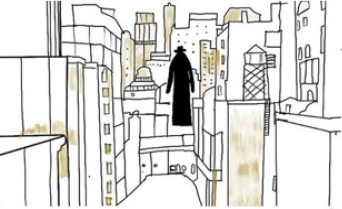
This study examines the atmospheric language of dystopian cinema, focusing on Alex Proyas’s Dark City (1998), through a tripartite analysis of atmosphere, film, and language theories. It posits that cinematic atmosphere functions as a distinct mode of communication, employing architectural representations and sensory elements to convey meaning. Utilizing Gernot Böhme’s atmosphere generators, Michael A. K. Halliday’s metafunctional linguistic theory, and Roland Barthes’s semiotic framework—particularly his expansion of denotative and connotative levels—the research analyzes audience interpretations through ideational sketches and interpersonal discussions to reveal the generators. Findings show that Dark City’s atmospheric design effectively communicates themes of control, isolation, and existential anxiety. Ideational sketches predominantly represented “things,” “non-things,” and “bodies,” while interpersonal discussions highlighted “movements” and newly proposed categories, perception of space and control, time, and narration. The integration of Barthes’s model further illuminates how denotative categories emerging from visual data often give rise to connotative meanings articulated in verbal responses, demonstrating the interdependence of these semiotic layers. Keywords such as “oppression,” “surveillance,” and “darkness,” consistently identified, underscore the film’s (con)textual structure. The study demonstrates that audience interpretations validate the film’s ability to evoke emotional responses, highlighting the active role of viewers in constructing cinematic meaning. Future studies could explore cross-cultural dimensions of this atmospheric language and the impact of emerging technologies on cinematic atmospheres, further enriching our understanding of film as a complex communicative medium.
Barthes, Roland. 1972 [1957]. Mythologies. The Noonday Press.
Bergfelder, Tim, Harris, Sue, and Sarah Street. 2007. Film Architecture and the Transnational Imagination: Set design in 1930s European Cinema. Amsterdam University Press.
Bhatta, Arjun Dev. 2025. “Control and Resistance: A Study of Dystopia on Orwell’s Nineteen Eighty-Four.” Rupantaran: A Multidisciplinary Journal 9 (1): 1–14. https://doi.org/10.3126/rupantaran.v9i01.73474
Böhme, Gernot. 1993. “Atmosphere as the fundamental concept of a new aesthetics.” Thesis Eleven 36 (1): 113–126. https://doi.org/10.1177/072551369303600107
Böhme, Gernot. 2013. “Atmosphere as Mindful Physical Presence in Space.” OASE Journal for Architecture 91 (21): 21–32. https://www.oasejournal.nl/en/Issues/91/AtmosphereAsMindfulPhysicalPresenceInSpace
Böhme, Gernot. 2014. “Urban Atmospheres: Charting New Directions for Architecture and Urban Planning.” In Architectural Atmospheres: On the Experience and Politics of Architecture, edited by Christian Borch. Walter de Gruyter. https://doi.org/10.1515/9783038211785.42
Böhme, Gernot. 2017a. The Aesthetics of Atmospheres, edited by Jean-Paul Thibaud. Routledge.
Böhme, Gernot. 2017b. Atmospheric Architectures: The Aesthetics of Felt Spaces, Bloomsbury Academic.
Bruno, Giuliana. 2002. Atlas of emotion: Journeys in Art, Architecture, and Film. Verso.
Canepa, Elisabetta, and Bob Condia (Eds.). 2023. Designing Atmospheres: Theory and Science. New Prairie Press. https://doi.org/10.5281/zenodo.7951750
Claeys, Gregory. 2016. Dystopia: A Natural History. Oxford University Press.
Claeys, Gregory. 2022. “Dystopia.” In The Palgrave Handbook of Utopian and Dystopian Literatures, edited by P. Marks, J. A. Wagner-Lawlor, and F. Vieira. Springer International Publishing. https://doi.org/10.1007/978-3-030-88654-7
Clarke, Justin. 2012. “Synchresis: Exploring Gestural Relationship Between Musical-Sound and Visual Gesture on Film: Synchresis as a Unifying Concept for Exploring and Creating Effective Multimedia Relationships.” Master’s thesis, Massey University and Victoria University, ProQuest. https://mro.massey.ac.nz/bitstream/handle/10179/5527/02_whole.pdf
de Saussure, Ferdinand. 1977[1916]. Course in General Linguistics. Translated by W. Baskin. Fontana/Collins.
Degen, Monica Montserrat, and Gillian Rose. 2012. “The Sensory Experiencing of Urban Design: The Role of Walking and Perceptual Memory.” Urban studies 49 (15): 3271–3287. https://doi.org/10.1177/0042098012440463
Deleuze, Gilles. 2019a. “Cinema I: The Movement-Image.” In Philosophers on Film from Bergson to Badiou: A Critical Reader (pp. 152–176). Columbia University Press.
Deleuze, Gilles. 2019b. “Cinema II: The time-image.” In Philosophers on Film from Bergson to Badiou: A Critical Reader (pp. 177–199). Columbia University Press.
Dong, Andy. 2007. “The Enactment of Design Through Language.” Design Studies 28 (1): 5–21. https://doi.org/10.1016/j.destud.2006.07.001
Dong, Andy. 2009. The Language of Design: Theory and Computation. Springer Science & Business Media. https://doi.org/10.1007/978-1-84882-021-0_6
Edensor, Tim, and Shanti Sumartojo. 2015. “Designing Atmospheres: Introduction to Special Issue.” Visual Communication 14 (3): 251–265. https://doi.org/10.1177/1470357215582305
Ehrat, Johannes. 2005. Cinema and Semiotic: Peirce and Film Aesthetics, Narration, and Representation. University of Toronto Press.
El Moussaoui, Mustapha. 2024. “Aesthetics, Authenticity & City Place-Making.” Rivista di estetica 85: 35–49. https://doi.org/10.4000/12tq9
Foucault, Michel. 2012. Discipline and Punish: The Birth of the Prison. Vintage Books.
Freitag, Florian, Molter, Céline, Mücke, Laura Katharina, Rapp, Helena, Schlarb, Damien B., Sommerlad, Elisabeth, Spahr, Clemens, and Dominic Zerhoch. 2020. “Immersivity: an interdisciplinary approach to spaces of immersion.” Ambiances. Environnement sensible, architecture et espace urbain. https://doi.org/10.4000/ambiances.3233
Gandy, Matthew. 2017. “Urban atmospheres.” Cultural geographies 24 (3): 353–374. https://doi.org/10.1177/1474474017712995
Griffero, Tonino. 2014. Atmospheres: Aesthetics of Emotional Spaces. Routledge.
Griffero, Tonino. 2019. “Pathicity: Experiencing the World in an Atmospheric Way.” Open Philosophy 2 (1): 414–427. https://doi.org/10.1515/opphil-2019-0031
Griffero, Tonino. 2022. “They are there to be perceived: Affordances and atmospheres.” In Affordances in Everyday Life: A Multidisciplinary Collection of Essays, edited by Zakaria Djebbara. Springer International Publishing. https://doi.org/10.1007/978-3-031-08629-8_9
Gruenwald, Oskar. 2013. “The Dystopian Imagination: The Challenge of Techno-Utopia.” Journal of Interdisciplinary Studies 25 (1/2): 1–38. https://doi.org/10.5840/jis2013251/21
Halliday, Michael Alexander Kirkwood. 1978. Language as Social Semiotic: The Social Interpretation of Language and Meaning. Edward Arnold.
Halliday, Michael Alexander Kirkwood. 2004. An Introduction to Functional Grammar. Hodder Arnold.
Harris, Roy, ed. 1996. Origin of Language (Vol. 7). A&C Black.
Hiçsönmezler, İlke. 2023. “Picturesque Atmosphere: A method to Read Spatiality and Aesthetics in Verbal and Visual Artworks.” Master’s thesis, Yaşar University. YÖK (843733). https://tez.yok.gov.tr/UlusalTezMerkezi/TezGoster?key=weFMBHaUra8rsS5wi2bmHFWSSBJEEeFhSDHfZEfJjCnvMpgCd_QqhP7LPO_J1XSh
Katsaridou, Maria, and Loukia Kostopoulou. 2024. “Digital Realities and Metaphorical Constructs: A Multimodal Semiotic and Intermedial Analysis of Blade Runner 2049.” Digital Age in Semiotics & Communication 7: 164–182. https://doi.org/10.33919/dasc.24.7.11
Kiessel, Marko, and Jonathan Stubbs. 2023. “Urban Dystopia on Screen: The City, Architecture and Power in the Contemporary Science Fiction Film.” Athens Journal of Architecture 9 (4): 1–33. https://doi.org/10.30958/aja.9-4-4
King, Geoff, and Tanya Krzywinska. 2000. Science Fiction Cinema: From Outerspace to Cyberspace (Vol. 3). Wallflower Press.
Klonowska, Barbara. 2018. “On Desire, Failure and Fear: Utopia and Dystopia in Contemporary Cinema.” New Cinemas: Journal of Contemporary Film 16 (1): 11–28. https://doi.org/10.1386/ncin.16.1.11_1
Lipkin, Jennifer. 2019. “Staging Atmosphere—A Spatial installation: The Study on Colour, Odour and their Cross-Modal Correspondences, as Factors in the Making of Architectural Atmosphere.” Master’s thesis, Aalto University. Taiteiden ja suunnittelun korkeakoulu / ARTS. https://urn.fi/URN:NBN:fi:aalto-201912016345
Madhusudana, P. N. 2018. “Utopian and Dystopian Literature: A Comparative Study.” International Journal of Creative Research Thoughts (IJCRT) 6 (4): 88-95. https://ijcrt.org/papers/IJCRT1133199.pdf
Marks, Peter. 2015. Imagining Surveillance: Eutopian and Dystopian Literature and Film. Edinburgh University Press.
Matarazzo, Anthony. 2023. “Dystopia: An Ecological History.” PhD dissertation, University of Ottawa. Thèses uOttawa. https://hdl.handle.net/10393/11105
Merrifield, Andy. 2000. “The Dialectics of Dystopia: Disorder and Zero Tolerance in the City.” International Journal of Urban and Regional Research 24 (2): 473–489. https://doi.org/10.1111/1468-2427.00259
Mette, Ivana. 2024. “La Terra Dei Figli. From the Graphic Novel to the Movie. Dehumanization and Reconfiguration of Imaginaries and Identities through Landscapes.” In Dystopian Worlds beyond Storytelling, edited by Valerio Alfonso Bruno, Antonio Campati, Paolo Carelli, and Anna Sfardini. Ibidem-Verlag.
Mursheeda, Afia. 2021. “Apocalypse is No More Far, It is Here: Prognostication about Technological Jeopardies in Dystopian Fiction and Film.” PhD dissertation, East West University. DSpace. http://dspace.ewubd.edu/xmlui/handle/123456789/3120
Newton, Alex Michael. 2015. “Semiotics of Music, Semiotics of Sound, and Film: Toward a Theory of Acousticons.” PhD dissertation, The University of Texas at Austin. UT Electronic Theses and Dissertations. https://repositories.lib.utexas.edu/items/ae7a736b-4d7f-4f8c-b31e-cee583c32bb1
Pallasmaa, Juhani. 2014. “Space, Place and Atmosphere Emotion and Peripheral Perception in Architectural Experience.” Lebenswelt 4 (1): 230–245. https://doi.org/10.13130/2240-9599/4202
Peirce, Charles Sanders. 1931–1958. The Collected Papers of Charles Sanders Peirce, edited by C. Hartshorne, P. Weiss, and A. W. Burks. Harvard University Press.
Pierson, David. 2022. “Dystopian Totalitarianism.” In Dystopian States of America: Apocalyptic Visions and Warnings in Literature and Film, edited by Matthew B. Hill. Bloomsbury. https://digital.casalini.it/9781440873393
Prakash, Gyan, ed. 2010. Noir Urbanisms: Dystopic Images of the Modern City. Princeton University Press. https://digital.casalini.it/9781400836628
Rauh, Andreas. 2019. “The Atmospheric Whereby: Reflections on Subject and Object.” Open Philosophy 2 (1): 147–159. https://doi.org/10.1515/opphil-2019-0017
Richard, Julie Ann. 2017. “On Dystopias: Do We Live in a Surveillance State?” Master’s diss., University of Louisiana at Lafayette. ProQuest (10601160). https://www.proquest.com/dissertations-theses/on-dystopias-do-we-live-surveillance-state/docview/1979139974/se-2?accountid=17380
Rosenfeld, Aaron S. 2020. Character and Dystopia: The Last Men. Routledge.
Schmitz, Hermann. 1969. System der Philosophie/3,2: Der Gefühlsraum. Bouvier.
Silver, Daniel Aaron, and Terry Nichols Clark. 2016. Scenescapes: How Qualities of Place Shape Social Life. University of Chicago Press. https://doi.org/10.7208/chicago/9780226357041.001.0001
Thuta, Mi. 2023. “This is the Bad Place: What Dystopian Literature Tells us About Oppression and Resistance.” The Mall 8 (1): 66–75. https://digitalcommons.butler.edu/the-mall/vol8/iss1/20
Üge, Talha. 2025. Atmosphere as Spatial Language: Semiotics of Atmospheric Aesthetics in Sci-Fi Dystopian Films. Master’s thesis, Yaşar University, Graduate School of Education, Department of Architecture. https://tez.yok.gov.tr/UlusalTezMerkezi/TezGoster?key=Xau5rw3KuCgEuy-FuJQtsK9NB-CnQjp45YWiAq0RT12I--BDE-_L_glV5O0AYoYx
Vaitsas, Fay. 2018. “Narratives that Shape our World: Reconceptualising the Archetypal Story into Dystopia and Beyond.” Metaphor 1: 22–31. https://search.informit.org/doi/10.3316/informit.522107245661485
Vasso, Gabrielle. 2018. “An Environmental Critique of American Post-Apocalypse Narratives: Ecocriticism and Ethics.” Master’s thesis, San Francisco State University. https://scholarworks.calstate.edu/downloads/ns064751p
Weidinger, Jürgen, ed. 2018. Designing atmospheres. Universitätsverlag der TU Berlin. https://dx.doi.org/10.14279/depositonce-6431
Weiss, Allan. 2009. “Offred’s Complicity and the Dystopian Tradition in Margaret Atwood’s The Handmaid’s Tale.” Studies in Canadian Literature 34 (1): 120–141. https://id.erudit.org/iderudit/scl34_1art07
Yacavone, Daniel. 2014. Film Worlds: A Philosophical Aesthetics of Cinema. Columbia University Press.
Zumthor, Peter. 2006. Atmospheres – Architectural Environments – Surrounding Objects. Birkhäuser.
Copyright (c) 2026 Ipek Ek, Talha Üge

This work is licensed under a Creative Commons Attribution-NonCommercial-ShareAlike 4.0 International License.
Authors who publish with this journal agree to the following terms:
- Authors retain copyright and grant the journal right of first publication with the work simultaneously licensed under a Creative Commons Attribution License that allows others to share the work with an acknowledgement of the work's authorship and initial publication in this journal which is under a Attribution-NonCommercial-ShareAlike 4.0 International license (CC BY-NC-SA 4.0).
- Authors are able to enter into separate, additional contractual arrangements for the non-exclusive distribution of the journal's published version of the work (e.g., post it to an institutional repository or publish it in a book), with an acknowledgement of its initial publication in this journal.
- Authors are permitted and encouraged to post their work online (e.g., in institutional repositories or on their website) prior to and during the submission process, as it can lead to productive exchanges, as well as earlier and greater citation of published work (See The Effect of Open Access).